
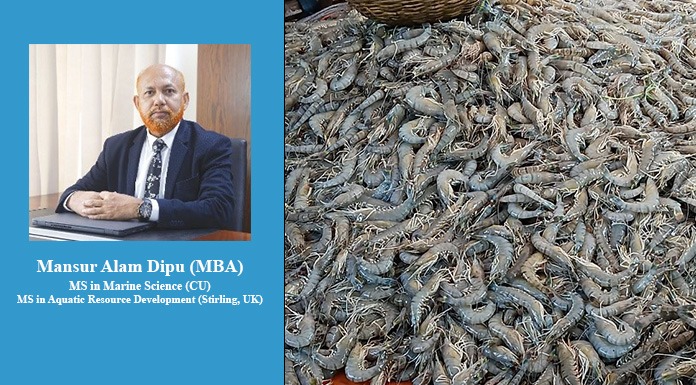
Seafood demand is rising due to the rapid increase in the global population, driven by its status as a high-quality and nutrient-rich protein source. Among the various types of seafood, shrimp is consistently in high demand because of its taste, variety, and nutritional benefits. As a result, shrimp farming has become increasingly important in meeting the protein needs of the global population.
In Bangladesh, the shrimp industry has faced challenges for many years, but recently the government—along with mostly small- and medium-scale farmers—has begun taking initiatives to support the sector’s growth. Intensification in shrimp aquaculture refers to farming practices that aim to increase production per unit area by increasing stocking density, introducing high-quality feed, and optimizing feeding practices. These approaches help farmers increase production yields and meet the rising demand in the consumer market.
At the same time, intensive shrimp farming creates challenges, such as high loads of organic matter in ponds. Maintaining productivity and shrimp health is often difficult due to disease outbreaks, poor water quality, and stress factors, all of which significantly impact shrimp health and overall farm productivity.
To manage the high organic load and maintain water quality, farmers need to adopt sustainable practices. One effective solution is the use of probiotics. Probiotics are beneficial microorganisms that help manage organic matter, improve water quality, and enhance the overall health of shrimp. By breaking down organic waste and outcompeting harmful pathogens, probiotics create a healthier pond environment, reducing the risk of disease and stress on shrimp
The Role of Probiotic in Shrimps Farming
1. Improve water quality:
Probiotics help maintain water quality by breaking down organic matter, reducing harmful ammonia and nitrate levels, and preventing the buildup of toxic compounds in the pond environment.
2. Disease prevention:
Certain probiotic strains inhibit the growth of harmful pathogens by competing for nutrients and attachment sites, producing antimicrobial compounds, and enhancing the shrimp’s immune response.
3. Enhance digestive health:
Probiotics improve gut flora balance in shrimp, facilitating better digestion, nutrient absorption, and overall growth rate.
4. Stress reduction:
By stabilizing environmental conditions and improving shrimp health, probiotics help reduce stress caused by overcrowding, temperature fluctuations, or handling.
Right Matching of Probiotic strain
Bacillus species play a vital role in shrimp aquaculture by enhancing growth, improving water quality, boosting immunity, and preventing disease outbreaks. These beneficial bacteria are widely used in shrimp farming because of their ability to promote a healthier gut microbiome, reduce pathogenic bacteria, and support a more stable aquatic environment.
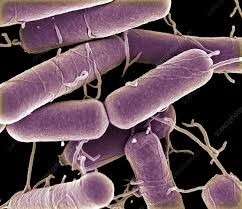
Fig : Bacillus subtilis,
One of the primary benefits of Bacillus species is their contribution to digestion and nutrient absorption. Species such as Bacillus subtilis, Bacillus licheniformis, and Bacillus coagulans produce digestive enzymes like protease, amylase, and lipase, which help break down proteins, carbohydrates, and fats in shrimp feed. This enhances feed conversion efficiency, leading to improved growth and survival rates.
In addition, Bacillus species combat Vibrio populations by producing antimicrobial compounds, organic acids, and through competitive exclusion mechanisms. Certain Bacillus strains also degrade organic matter by breaking down excess feed and shrimp waste, which helps reduce harmful ammonia, nitrite, and nitrate levels. This bioremediation process creates a healthier environment, minimizing stress and mortality among shrimp.
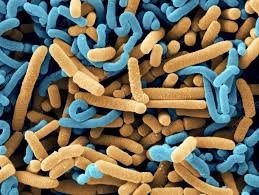
Fig: Lactobacillus acidolhilus
Lactobacillus species are widely used as probiotics to promote gut health in shrimp. A key benefit of Lactobacillus is its ability to improve digestion and nutrient absorption. Species such as Lactobacillus acidophilus, Lactobacillus plantarum, and Lactobacillus casei produce enzymes that help break down proteins, carbohydrates, and lipids into simpler forms, making them easier for shrimp to digest. This leads to better feed utilization and improved growth performance. Additionally, Lactobacillus produces lactic acid, which lowers the gut pH and creates an unfavorable environment for pathogenic bacteria such as Vibrio, thereby reducing the risk of disease.
To get the most out of probiotics, it is important to apply them regularly and consistently, following the manufacturer’s instructions to maintain their effectiveness. Additionally, regularly testing water parameters helps assess the impact of probiotics and allows farmers to make necessary adjustments. Combining probiotics with good farm management practices—such as proper biosecurity, waste management, and disease prevention—further enhances their effectiveness and helps maintain a healthy, stable, and productive shrimp farming environment.
Mansur Alam Dipu (MBA)
MS in Marine Science (CU)
MS in Aquatic Resource Development (Stirling, UK)